

FTIR and Raman Solution House
FTIR and Raman Solution House Expertise, technology and training to help you solve analytical challenges and achieve confident results. Talk to a SpecialistRequest a Virtual Demo Your Solution House: Confident…
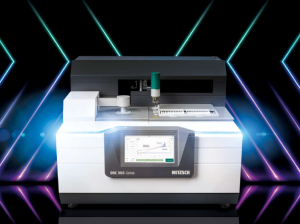
The Differences of DSC 300 Caliris® Supreme and Select
DSC 300 Caliris® Supreme & Select The newly launch DSC 300 Caliris® is designed to meet customers’ demands of modularity, flexibility & simple operating procedures. The Caliris® is available in…
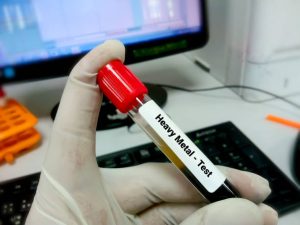
DETERMINATION OF MERCURY (Hg), ARSENIC (As), SELENIUM (Se), ANTIMONY (Sb) AND BISMUTH IN CLINICAL SAMPLES USING ATOMIC FLUORESCENCE SPECTROMETRY
The determination of toxic metals Hg, As and Sb in biological samples of humans is an important clinical screening procedure. Exposure of these metals from the diet, local surroundings and industrial & occupational processes can lead to serious and significant health issues.
Analyzing the total concentration of these elements is important but, by no means, the whole story.

USING ATOMIC FLUORESCENCE SPECTROMETRY FOR THE DETERMINATION OF MERCURY (Hg), ARSENIC (As), SELENIUM (Se), ANTIMONY (Sb) IN ENVIRONMENTAL SAMPLES
Soils are the major sink of these metal contaminants, while in aquatic systems, sediments are the major recipients for these pollutants. With the addition of analyte separation capabilities (which is becoming more routine) allowing for speciation studies, PSA offers powerful analytical tools to help contract laboratories, research teams and regulators alike with these determinations.

USING ATOMIC FLUORESCENCE SPECTROMETRY FOR THE DETERMINATION OF MERCURY, ARSENIC, SELENIUM & ANTIMONY FROM FOOD, FEED AND BEVERAGE SAMPLES
The consumption of food and drink is one of the main sources of exposure to toxic metals. Selenium, is an essential nutritional element and is often added as a supplement
to food for health benefits. It is also an important element in animal feed to ensure livestock wellbeing. Coupling Atomic Fluorescence Spectrometry (AFS) with either cold vapour generation or hydride generation has been PSA’s core
competency for over 35 years.

ONLINE WASTEWATER ANALYSIS FOR THE DETERMINATION OF MERCURY(Hg), ARSENIC (As), SELENIUM (Se) AND ANTIMONY (Sb) USING ATOMIC FLUORESCENCE SPECTROMETRY
In recent years wastewater treatment plants have been installing technologies to capture and remove the metals. The efficiency of these treatment processes needs to be monitored using accurate analytical systems.PS Analytical offers 2 fully automated online wastewater analysers are PSA 10.226 Online Hg and PSA 10.256 Online Excalibur (for As/Se)
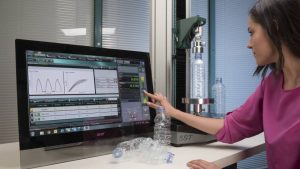
HOW TO TEST PLASTIC MATERIAL PROPERTIES?
Here is a list of common test methods used to evaluate plastics. They tell you how to check tensile and flexural properties, stiffness, impact, hardness, flammability, etc. Where applicable, ASTM specs are given as sources for more detailed information.
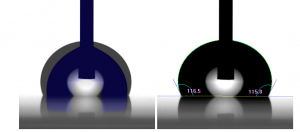
WHAT IS DYNAMIC CONTACT ANGLE (DCA)?
When we talk about “Dynamic Contact Angle” (DCA), there are two quite different subjects that may be addressed:
– Time-Dependent Contact Angle (tDCA)
– Motion-Dependent Contact Angle (mDCA)
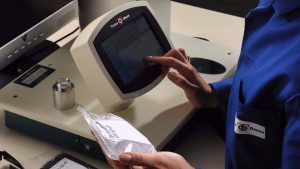
FREQUENTLY ASKED QUESTIONS (FAQs) FOR MELT FLOW INDEXER (MFI)
How Does Melt Flow Indexer Works? It heats and compresses thermo-softening resin, then measures resin extrusion rate through an orifice, under carefully carefully controlled conditions such as..

ESSENTIAL TOOLS FOR POLYMER CHARACTERIZATION
Polymer characterization is important in developing new polymers as well as maintaining quality control in manufacturing processes. As such, many characterization techniques should ideally be linked to the desirable properties of the material, hence analytical techniques are typically used to determine molecular structure, molecular mass / chain length, thermal properties and mechanical properties.

Products & Solutions
Thermal and Thermophyscial Analysis
Thermal Diffusivity and Thermal Conductivity (LFA)
Microfluidizer
Rheology Testing
Molecular Spectroscopy
FTIR Accessories
Particle Characterization
High Performance Thin Layer Chromatography
Material / Physical Testing
Viscometry, Tensiometry and Surface Analyzer System
Mercury, Arsenic & Selenium Analyzer
Fire Testing Systems
Food Composition and Quality Testing Solutions
Specialized Industrial Solutions
Nuclear Magnetic Resonance
Follow Us
Hello!
Kindly click one of the contacts below to start a chat with us on WhatsApp.